 OpenStreetMap

I find that the width of OSM ways is a useful property for determining how good a pedestrian route is. However, it is often missing from OSM. As an experiment, I decided to use my running activities from Strava to estimate the width of a single OSM way that I use often. The specific way ID I used is in a relatively open area, meaning GNSS error is minimized. I also have collected over 100 traces of me running that single way ID over ~1.5 years. Given all this, how accurate can the estimate of the width be? I got the median width to be in the range of 11 meters. The actual width as measured with Google Maps satellite imagery is 13 meters. It’s close. I am happy with the result. I don’t have nearly as many traces for any other segment on the OSM map, so it’s a limited experiment, but the potential is promising. See the code on Github.
Diary Entries in English
Recent diary entries

“From here, how do we get to Ragunan Zoo?”
Good question.
I paused. This wasn’t a matter of intuition; it was a routing problem.
I opened a navigation app, queried the destination, and switched the mode to public transport. The proposed solution was a multi-hop journey : take the blue commuter line to Manggarai, transfer to the red line toward Bogor, get off at Pasar Minggu, then continue with something called S15A.
S15A?
That identifier triggered a red flag. After a quick lookup, it turned out to be an angkot.
That immediately raised another question. Was there really no direct busway route to Ragunan? Not even a JakLingko alternative? Cost sensitivity was also a concern. There are plenty of public transportation modes in this city: MRT, LRT, Commuter Line, Transjakarta BRT, and Transjakarta non-BRT, but angkot and ride-hailing motorcycles are the two worst options, since they can end up being pricey due to the lack of government subsidization.
At that point, I decided to discard the initial navigation output entirely. Close the app. Start over with a more specialized tool.
I switched to the official Transjakarta application.
It refused to open and forced an update. Fine. Update first, then rerun the query.
Post-update, I defined the problem more explicitly. Assume the train leg was already completed. Starting point: Pasar Minggu Station. Destination: Ragunan. The goal was to find a replacement for the S15A angkot.
Search results came back clean. Instead of S15A, there was a JakLingko option: JAK47, Pasar Minggu–Ragunan. That was acceptable. Same endpoint, better integration.
Solution candidate number one locked in.
Then I expanded the scope. What if we removed the train entirely? What if the journey started directly from Bekasi using Transjakarta, via Vida to Cawang Sentral?
New query. New parameters. Starting point: Cawang Sentral. Destination: Ragunan.

When I first started the ESA Validation Fellowship, I’ll admit I felt like a bit of an outsider. Even though I loved mapping, I often struggled with imposter syndrome, wondering if my skills actually measured up to the “expert” level. Looking back now, the growth I’ve experienced is incredible. I remember how intimidating JOSM used to feel with all its complex buttons and menus, but through this fellowship, it has become like a second language to me. I’ve moved past the basics and now feel completely at home using advanced tools to clean up and verify data. I learned new shortcuts and got to publicly map as others watched, proving to myself that I belong in this space.
Working alongside such talented people helped me realize that I really am an advanced mapper and a capable validator. Seeing my work hold up next to theirs finally silenced that voice in my head telling me I wasn’t good enough.
But as much as I’ve grown technically, the heart of this experience has been the people. Connecting with a global community of mappers who share the same passion for “mapping for change” has been the most rewarding part of the journey. The fellows were always helping each other out and in constant communication, a true community and something that happens only when people have common goals beyond borders. Together, we’ve been able to support humanitarian efforts and help communities become more resilient by making sure the maps they rely on are accurate and high-quality. Whether it’s a rural village or a growing city, I now understand that a precise map can be a lifeline.
This fellowship has changed how I see my work and myself. I’m walking away with new skills and if I could coin a phrase for the ESA Validation Fellowship, it would be : Certainly, what we do truly matters for the world.

During the ESA HOTOSM Validation Fellowship, my journey began with the basics—learning how to install JOSM on my laptop and understanding its interface. From there, I learned how to install and use essential plugins such as the Building Tools plugin, Utils plugin, Mapathoner, and other supporting tools that greatly improved my workflow and actually made my validation easy. I also learned how to install and apply map paint styles, which helped me easily detect issues such as overlapping buildings and missing or incorrect tags, learnt how to work with different imagery such as bing, Esri and how to deal with the imagery offsets. These foundational steps laid the groundwork for my growth as a validator and deepened my understanding of data quality in OpenStreetMap. As the fellowship progressed, we moved into active validation, where I gradually became familiar with new JOSM shortcuts that made mapping and validation more efficient. Shortcuts such as B for drawing buildings, G for ungluing objects, and Ctrl + Shift + G for replacing the geometry significantly improved my speed and accuracy. As someone who had not done validation before, the daily practice sessions were extremely valuable. Validating tasks across different regions allowed me to learn by doing, and with each task, my confidence and skill level improved. This consistent hands-on practice reinforced the idea that practice truly makes perfect.

My Growth Journey in the ESA validation Fellowship
When I was first selected for this fellowship, I felt a mix of excitement and nerves. My first major assignment was Hot Tasking Manager Project #16505, and I’ll be honest: it was a wake-up call. Initially, the tasks felt daunting. I quickly realized that while I knew how to map, I hadn’t yet mastered the advanced features required to validate data efficiently.
My workflow was slow, and I felt I was missing the technical “bridge” needed to ensure the high-quality data that a project of this scale demands. The breakthrough came through the mentorship of our facilitators. They introduced us to a suite of professional techniques and GIS tools that changed everything. Specifically, learning how to leverage advanced filters and JOSM shortcuts was a game-changer.
These weren’t just “tips” they were the keys to unlocking a much more efficient and precise validation process. By integrating these tools into my daily workflow, my technical hurdles disappeared. What once felt overwhelming now feels intuitive. This fellowship has done more than just teach me how to click buttons; it has provided me with:
- Technical Proficiency: A deep understanding of GIS features I previously overlooked.
- Confidence: The ability to validate complex data with precision.
- Professional Growth: A clearer perspective on the standards required in the GIS profession.
I am walking away from this experience with full confidence in my skills and a renewed passion for contributing high-quality data to the OpenStreetMap community

Introduction
The ESA Hub Fellowship was a deeply enriching and practical learning experience that significantly strengthened my skills in geospatial data production, validation, and humanitarian mapping. From the beginning, the fellowship introduced me to the mission of ESA Hub and the critical role that open geospatial data plays in disaster response, resilience building, and inclusive decision-making. I developed a strong understanding of the OpenStreetMap (OSM) ecosystem, humanitarian mapping principles, and the workflows of the HOT Tasking Manager, which laid a solid foundation for meaningful contributions to real-world projects.
Throughout the fellowship, I gained extensive hands-on experience in mapping and contributing to several humanitarian and disaster response projects. Using tools such as iD Editor and JOSM, I digitized key features including buildings, roads, waterways, and other critical infrastructure from high-resolution satellite imagery. I actively contributed to projects supporting humanitarian response in Sudan, Mapping for disaster resilience in Elgeyo Marakwet, and emergency response efforts for Hurricane Melissa in Jamaica, among many other projects. These contributions helped improve the availability and quality of geospatial data in under-mapped and disaster-affected regions, supporting responders and planners on the ground.

As of December 13th, 2025, Swift and Portal interlockings have been renamed to “Old Swift” and “Old Portal”. Tracks and signals have also been renamed (2 turned into 22 and 3 turned into 33). I’ve already put in the edits.

OSM: osm.org/#map=16/40.75308/-74.09527
Openrailwaymap: https://openrailwaymap.org/?style=standard&lat=40.7532&lon=-74.1037&zoom=15
NYW1-23-b: https://archive.org/details/AMTK-NEC-employee-timetable-supplemental-bulletin-20251213-NYW1-23-b
Current NEC ETT: Amtrak - Northeast Corridor Employee Timetable 2025-11-03, Special Instructions
As always, I put all bulletins and new employee timetables in this list on Archive.org
Amtrak’s FOIA office is now really fast. I can get bulletins the same day they are requested. Back in August they were much slower but now that I’m doing these every month they are on top of it.

During the fellowship, I learned how to validate more effectively, especially by using filters, search functions, and setting up map paint styles. I became better at identifying issues, mapping across different countries, and validating data from other regions. This helped me understand mapping more deeply, including the different shapes of buildings across countries. I also gained a stronger grasp of quality standards and grew more comfortable using JOSM shortcuts. For example, while validating building footprints in Africa and later in Asia like Japan, North and South America, I noticed differences in building construction styles and settlement patterns. By applying filters and map paint styles, I was able to quickly identify inconsistencies such as overlapping polygons or missing tags and correct them. This experience not only improved my technical validation skills but also gave me a broader perspective on how mapping standards can be applied across diverse contexts.
During my validation mapping in Japan, I encountered a task where the same area had been mapped using two different imagery sources of Bing and Esri. This created alignment issues and inconsistencies in the data. Through the fellowship, I learned how to handle imagery offsets, switch between imagery layers and use search tools to trace a particular mapper’s edits. By applying these skills, I was able to identify the discrepancies, adjust the imagery and improve the overall quality of the map. This experience was particularly meaningful because it showed me how technical validation techniques like managing imagery sources and targeting specific edits can directly enhance data accuracy. It was a proud moment to see how my improved skills contributed to cleaner, more reliable mapping outputs.

contributors
may I point you to our online mapathon?
Missing Maps London Online: Zoom
Our next Missing Maps mapathon will be Tuesday the 3rd of February and will take place online from 19:00 – 21:15 (Europe/London)
The early month meeting is focused on new mappers with breakout rooms for iD, JOSM and mappers who want to learn about validation usually with JOSM. Get your free ticket .
This Mapathon will take place online! If you wish to attend, then please get a ticket and details for joining will be shared with you.
This event is London based in name only! Since we have moved to virtual events we have been getting attendees from all over the world - we heartily welcome this!
Schedule 19:00: Introduction to Missing Maps and practical information
19:15: iD Training / JOSM Training / Validator Training
21:00: Closing discussion and potential talks

I’m finally back to mapping after an unplanned 4-month break.
I usually have a casual but relatively consistent approach to mapping: every time I have to go somewhere new and my exact destination isn’t in OSM, I add it once I arrive; if the opening times of a place I visit regularly change, I update them, and so on. As of late, though, this just hasn’t happened. Either map data has become good enough for my everyday needs in Gothenburg, Sweden or I’ve been paying less attention than usual. Probably a little bit of both.
Right now, on the other hand, I’m visiting my family in Agrigento, Italy, and mapping is the perfect holiday activity for me: it can (to some extent) be done without a computer, which is a nice change of pace, and it gives me an excuse to be outisde, enjoy the warm weather and take all the side streets I haven’t explored before or have forgotten about. Plus, there’s so much to do here compared to Gothenburg!
Today I simply went for a walk and answered a bunchn of quick questions on StreetComplete. In the next few days, I want to try something more systematic, like updating information about what’s happening inside each of the buildings of the main street: a lot has changed since I last came. I’m also pondering trying to get one or two family members involved; we’ll see.
Started this year with a weekend mapping project: locate and map public traffic camera feeds from city’s website. Day 2 and I’m halfway done, about 130 out of ca 260 have live feed links now. Roughly 5 of them weren’t previously mapped at all.
Purpose of this diary entry is to save the checker scipt in publicly accessible place for unlikely reuse. Script scrapes all possible camera IDs and cross references them against already mapped feeds via overpass.
EDIT: Project was mostly completed as of 2026-01-02, changeset/176761784 outlines up to 10 missing cameras yet to be mapped.
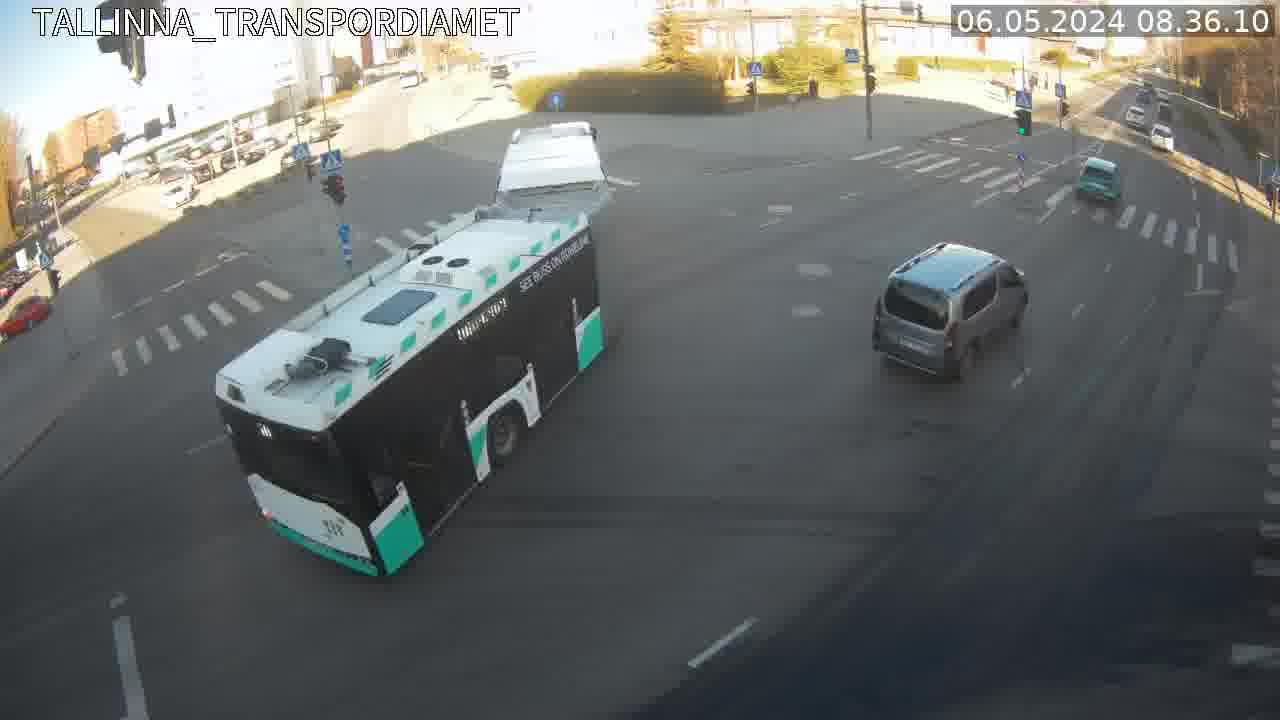
Overpass query to get already mapped ones:
[out:json][timeout:25];
area(id:3600079510)->.searchArea;
node["contact:webcam"~ristm](area.searchArea);
out geom;

.webm/800px--Amaravati_timelapse_OSM_edits_(2015-2025).webm.jpg)
Link to the Time Lapse Video of Amaravati (2015-2025)
Time lapse video of OSM has been of interest to me for more than 10 years. I learned to use QGIS in 2015 and made a physical map of Andhra Pradesh in my first attempt. Learning QGIS with its myriad menus and concepts of GIS was daunting to venture further during my infrequent attempts. Finally I made my first time lapse video after 10 years. I found OSM contributor radiotrefoil's diary entry on the subject posted about an year back very helpful. Still I had to struggle to make a good video for OSM edits for Amaravati, the green field capital of bifurcated Andhra Pradesh, a province of India. This is an attempt to document my learnings and make it easier for others.
Choosing an area of interest and fetching data

My New Year’s resolution is to try not to lose any interest in mapping!
How do I do that?
I don’t know.
What about you guys, what is your New Year’s Resolution related to mapping?
Last weekend I traveled to the west coast of Java, specifically Anyer in Banten. The journey was done by train from Jakarta to Cilegon, followed by a local shared minivan taxi to Anyer.
Throughout the trip, I collected field observations using Sakumap. The result was a raw GeoJSON file containing coordinates and timestamps for each entry.

For observations I considered significant, I wrote a detailed report on the OSM Wiki. Less critical features such as restaurants, fuel stations, farms, and forest areas were added directly to OpenStreetMap by importing the Sakumap GeoJSON into iD Editor or JOSM, without additional documentation on the wiki, as the overhead did not seem justified.

Hey, this is my first post here and I think it would be fitting if I’d tell all of you why I even created an account here and started making my own edits on OSM.
Background
First, you need to know that I’m a student at Westpomeranian University of Technology in Szczecin in department of computer science. That means that me, and 90% of people there are nerds with interests like: trains, transportation, hacking, programming, opensource and… well… maps.
How it started?
It all started during a normal day at University. We were walking from one building on campus to another when I noticed that my friend has a map open with a lot of pins and some questions on his phone. I asked him what it is and he told me about “Street Complete”. That’s it! I already knew that my ADHD butt found a new hyperfocus for the indefinite amount of time. I installed it and 3 of us started adding the detail information on the map around our campus.
Street Complete era
So… for the next few days I had Street Complete open on my phone during every tram ride and every walk. I wanted to fill every question. This took some time, I answered some question around the Poland in Szczecin, Kielce, and recently in Wałcz.
Taste for more
Right now I’m at my family house in a village where most OSM information where updated several years ago. I went on a walk and - as usual - opened Street Complete. It was great until I came by a few buildings that were demolished few years ago, but were never deleted from the map. I knew that I can’t just leave them there and I couldn’t do this from Street Complete. I went back home and booted my laptop. I opened the OSM editor for the first time and started making edits around the village. Adding houses that were build recently, deleting stuff that no longer existed, updating the zones, etc.

My diary entries are all my own thoughts and do not represent OpenStreetMap, The Humanitarian OpenStreetMap Team (HOT) or any organisation using the HOT systems. Any errors are all my own work.
Back in January 2025 I found myself mapping a HOT project in Kulob, Tajikstan. I had wanted to find a project to gain some experience of mapping water features and this project fit the bill. In support of a local tuberculosis screening programme, Médecins Sans Frontières required the update or addition of roadways, waterways and residential areas. No buildings. This was not a high priority project, so did not get much interest from the general HOT community. Only 11 mappers, with 3 completing tasks. Local mappers would be updating feature and area names. I mapped about 85% of the project, so I have a little stakeholder interest in the data use.
Around the same time I had started attending the Missing Maps London on-line mapathons early in month and mid-month events. As well as getting mapping advice, this put me in touch with the wider HOT mapping community. It turned out that Jorieke, the Kulob project manager, is a regular of the Missing Maps sessions. Along with several of my HOT on-line mapping colleagues, we met at SOTM Europe in Dundee .
Today Jorieke sent me a link to a podcast interview with one of the MSF doctors using the OSM data in Kulob. We rarely get to know about how our mapping supports end users, you can hear it here and discover other mapping related podcasts.
I was visiting Sa Pa, Vietnam, and navigating with Organic Maps. I was looking for a street that would bring me back to the city center. I could not see any on OSM or Google Maps. I walked for a while and was able to see a street that led in the right direction. It turns out that it connected to another street that brought me where I wanted to go. This made me realize how much of the useful information in maps depends on people walking, running, or commuting through those streets. You cannot see these kinds of streets from satellite images. You can only know them, but knowing them, you may not use GPS tracking to record them. I think this leaves only runners and anyone who likes walking to discover most of the streets that are not currently on the map.

Dear OSM Community
The OSM Apps Catalog presents existing apps based on OSM data.
I have plans to redesign the OSM Apps Catalog. In particular, I want to make the landing page and the detailed view of the apps more accessible to a wider audience.
To understand what this needs, I have created a survey. Please fill it out and share your perspective with me. I would be very grateful if you could forward the survey to people who are not particularly interested in technology. This perspective is especially important to me.
Best regards
Markus aka ToastHawaii
dataset column i: A0025A
rel62578,r2613711,r2613712,r2613713,r2613714,r2613715,r2613716,r2613717,r2613718,r2613719,r2613720,r2613721,r2613722,r2613723,r2613724,r2613725,r2613726,r2613727,r2613728,r2613729,r2613730,r2613731,r2613732,r2613733,r2613734,r2613735,r2613736,r2613737,r2613738,r2613739,r2613740,r2613741,r2613742,r2613743,r2613744,r2613745,r2613746,r2613747,r2613748,r2613749,r2613750,r2613751,r2613752,r2613753,r2613754,r2613755,r2613756,r2613757,r2613758,r2613759,r2613760,r2613761,r2613762,r2613763,r2613764,r2613765,r2613766,r2613767,r2613768,r2613769,r2613770,r2613771,r2613772,r2613773,r2613774,r2613775,r2613776,r2613777,r2613778,r2613779,r2613780,r2613781,r2613782,r2613783,r2613784,r2613785,r2613786,r2613787,r2613788,r2613789,r2613790,r2613791,r2613792,r2613793,r2613794,r2613795,r2613796,r2613797,r2613798,r2613800,r2613801,r2613802,r2613803,r2613804,r2613805,r2776569
[out:xml][timeout:25];{{geocodeArea:Köln}}->.searchArea;rel["admin_level"~"6|9|10"](area.searchArea);out meta;

Panama Canal Authority–Supported Open Data Initiative
Background and Context
The Los Chorros de Ciri basin, located west of Panama City, is a hydrologically and socially important watershed that supports rural communities while contributing to regional water security. In recognition of this dual importance, the Panama Canal Authority (ACP) funded a high-resolution mapping project focused on community-oriented outcomes and long-term public benefit.
This project represents a shift away from closed, single-purpose GIS deliverables toward open geospatial data that can support community planning, environmental stewardship, and collaborative mapping initiatives.
Project Objectives
The mapping effort was designed around the following goals:
- Generate high-accuracy base mapping of the Los Chorros de Ciri basin using drone photogrammetry
- Identify and document community presence within the watershed
- Release derived GIS products for public and open-source use
Data Acquisition and Processing
Drone Photogrammetry Surveys
Multiple drone missions were conducted in early September 2025, covering discrete but adjacent blocks within the basin. The surveys achieved consistent, high-resolution coverage suitable for both environmental and community-scale mapping.
Key characteristics of the datasets include:
- Area coverage exceeding 9 square kilometers across all survey blocks
- Ground sampling distance between 4 and 5 centimeters
- Full image reconstruction for all flights
- Dense point clouds exceeding hundreds of millions of points per block
These datasets were processed using WebODM Lightning and generated orthophotos, digital surface models, and digital terrain models suitable for GIS analysis and mapping.
Accuracy and Quality Control
Survey accuracy was evaluated using GPS and 3D error metrics derived during processing. Reported results indicate: